
Liposuction is a surgical Body Contouring procedure designed to remove localized fat from specific areas of the body.
It can help improve shape, proportion, and definition in areas that do not respond well to diet and exercise.
But Liposuction is often misunderstood.
At American Plastic Surgery Insider, this guide was created to help patients understand what truly matters before choosing a Liposuction surgeon.
A strong Liposuction result should usually:
Before choosing a surgeon, patients should understand what Liposuction can and cannot do, why it is not a weight loss procedure, how modern technologies may help in selected cases, and why surgeon judgment matters more than any device or technique.
Liposuction can address localized fat in areas such as:
However, Liposuction has limits.
It cannot tighten significant loose skin. It cannot repair muscle separation. It cannot remove internal fat around the organs. It cannot replace weight loss. It cannot create perfect symmetry. It cannot guarantee a smooth result in every patient.
It also cannot change poor skin quality.
Liposuction is best understood as a contouring procedure, not a weight loss solution.
Patients who treat Liposuction like a shortcut for weight loss may be disappointed. The best candidates are usually close to a stable weight with specific areas of fat they want to improve.

This is one of the most important points patients need to understand.
Liposuction removes fat from targeted areas, but it does not replace:
A patient may lose some volume after Liposuction, but the main goal is shape.
A good result is usually seen in:
The goal is not simply to remove as much fat as possible. The goal is to create a better contour safely.
Over-removal can create dents, waviness, loose skin, and unnatural transitions.

Liposuction may sound simple, but it is highly dependent on surgical judgment.
The surgeon must understand:
A poor Liposuction result may create:
Liposuction is not just fat removal. It is sculpting.
A surgeon who removes fat without understanding proportion can create a result that looks worse, not better.
Modern Liposuction may involve different technologies designed to assist fat removal, improve precision, reduce effort, support skin contraction, or help refine contour in selected patients.
These may include:
Each technology has potential advantages and limitations.
Some technologies may help break up fat more efficiently. Some may be useful in fibrous areas. Some may support a degree of skin contraction. Some may help with more precise body sculpting. Some may be useful in revision cases or areas with denser tissue.
But patients need to be careful.
Technology does not replace surgical skill.
A device can assist a surgeon, but it cannot make poor judgment safe. It cannot guarantee smooth results. It cannot make loose skin disappear in every patient. It cannot turn every patient into a candidate for high-definition contouring.
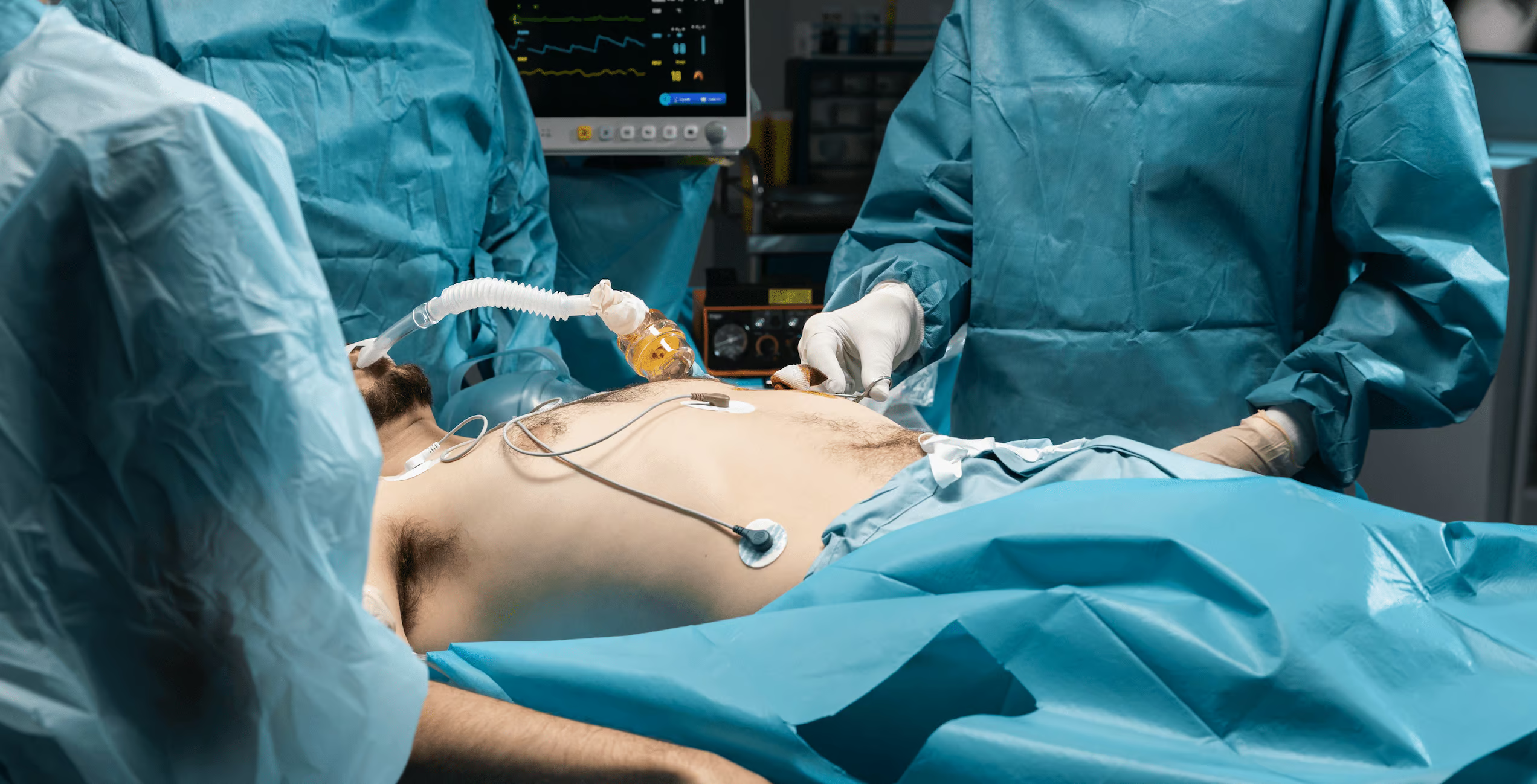
Traditional Liposuction can still produce excellent results when performed by an experienced surgeon.
The idea that older techniques are automatically inferior is misleading.
Traditional Liposuction may be appropriate when the patient has:
Technology-assisted Liposuction may be considered when the surgeon wants help with:
However, more technology is not always better.
Some patients may not need energy-based assistance. Some may face additional risks if energy is used aggressively or incorrectly.
The best approach is not the newest approach. The best approach is the safest and most appropriate approach for the patient’s anatomy.
One of the most controversial areas in modern Liposuction is skin tightening.
Many patients are told that certain technologies can tighten the skin after fat removal.
Sometimes, this can be true to a degree.
But it has limits.
Energy-based technologies may help improve tissue contraction in selected patients, especially those with mild to moderate laxity. However, they cannot reliably replace skin removal when there is significant loose skin.
Patients with major skin laxity may still need:
If the problem is loose skin, Liposuction alone may make the looseness more visible.
This is where patients are often misled.
A patient with poor skin elasticity may be sold Liposuction with skin tightening technology, when the more honest recommendation might be surgical skin removal.

High-definition Liposuction is designed to create more visible contour, shadowing, and muscular definition.
It may be used to enhance areas such as:
This approach can create dramatic results in selected patients.
But it is not for everyone.
High-definition Liposuction usually requires:
Patients should be cautious if they are promised athletic definition without the right anatomy or lifestyle.
High-definition results can look impressive, but they can also look unnatural if overdone or poorly planned.
The goal should not be to carve artificial lines into every body.
The goal should be to enhance the patient’s natural structure in a way that still looks believable.
In some cases, fat removed with Liposuction may be transferred to another area of the body.
This can be used for selected contouring goals.
However, patients should understand that fat transfer has limitations.
Important realities include:
Fat transfer should not be treated like a simple add-on.
It is a separate surgical decision with its own risks, benefits, and limitations.
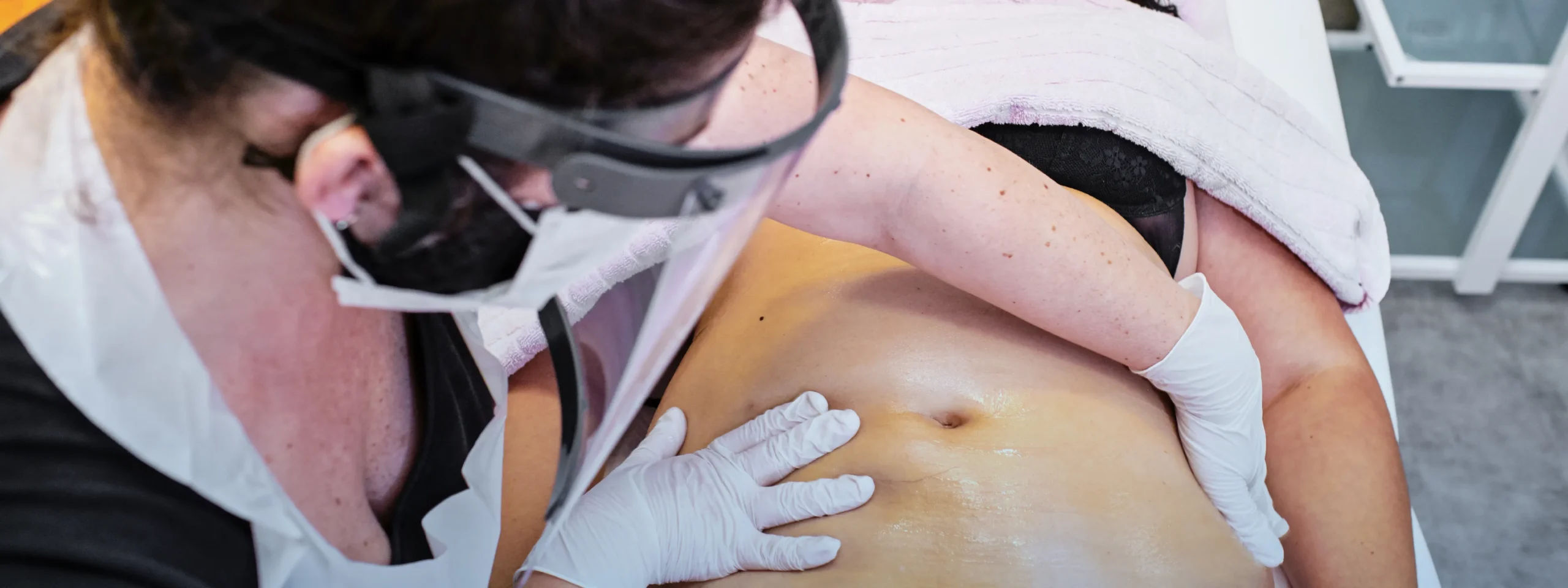
Liposuction marketing can be very persuasive.
Patients should be cautious when they hear claims such as:
These claims should be questioned.
A responsible surgeon should explain both the benefits and the limitations.
If the consultation feels like a device demonstration instead of a surgical evaluation, that matters.
The device is not the surgeon.
The surgeon’s judgment is what determines whether Liposuction is appropriate, safe, and likely to create a good result.
When properly planned, Liposuction can create meaningful improvement.
Potential benefits may include:
Many patients choose Liposuction because they already live a healthy lifestyle but still struggle with specific areas of fat.
The best Liposuction results often look like a better version of the patient’s natural shape, not a completely different body.
Patients often underestimate the risks and limitations of Liposuction.
Important realities include:
Patients should also understand that Liposuction is not a pass to stop maintaining their health.
Fat cells removed from treated areas are reduced, but remaining fat cells can still enlarge with weight gain.
Liposuction can improve contour, but it does not protect patients from future body changes.
Liposuction should never be treated casually.
Possible risks may include:
Risk may increase when too much fat is removed, too many areas are treated at once, or surgery is performed in patients who are not good candidates.
A serious surgeon should discuss safety limits.
Safe Liposuction is not about doing the maximum possible. It is about doing what is appropriate for the patient’s body and health.

Look for a surgeon with specific experience in Liposuction and Body Contouring.
Patients should evaluate:
A strong surgeon should be able to explain:
A good Liposuction surgeon does not simply promise fat removal. They explain contour, skin, safety, and long-term expectations.
Be cautious if a surgeon:
Patients should also be careful with extremely dramatic social media transformations.
Lighting, posing, weight loss, swelling stage, camera angles, and editing can all affect how results appear.
The best result is not always the most dramatic photo. It is the result that looks smooth, balanced, safe, and natural in real life.

A serious Liposuction consultation should be specific, direct, and honest.
Important questions include:
A strong surgeon should welcome these questions and answer them clearly.
If the answers feel vague, rushed, or too focused on selling a device, that matters.
Before-and-after photos are useful, but patients should review them carefully.
Do not look only for the smallest waist or the most dramatic angle.
Look for:
Pay close attention to lighting and posture.
A patient standing differently can make a result look more dramatic than it is.
Good Liposuction photos should help patients understand the surgeon’s contouring judgment, not just the amount of fat removed.
Liposuction recovery varies by area, extent of surgery, technology used, and patient healing.
Early recovery may involve:
Swelling can take months to fully improve.
Some areas may feel firm, tender, uneven, or numb during healing.
The final result can be affected by:
Patients should not judge their final Liposuction result too early. Body Contouring results evolve over time.

Safety should always come before appearance.
Before moving forward, patients should understand:
Liposuction can create long-lasting improvement in treated areas, but the result still depends on weight stability, lifestyle, aging, and tissue quality.
The most successful results usually come from:
Liposuction should not be sold as an easy shortcut. It should be planned as a surgical contouring procedure with real benefits, real risks, and real limitations.
American Plastic Surgery Insider features selected Plastic Surgeons with experience in Liposuction and Body Contouring.
These profiles are designed to help patients better understand:
Choosing the right Liposuction surgeon requires research, patience, and honest expectations.
The goal is not to remove the most fat possible or choose the most advanced-sounding technology.
The goal is to choose the right surgeon, the right technique, and the safest long-term plan for your body, your contour, and your confidence.
